
Build a Madison Arrest Log
Madison County's sheriff posts no stand-alone weekly arrest log. The county's public-record inventory does list a maintained series called Daily Inmate Bookings from Jail Division. An inventory, though, is not a blotter. For a working method, open the Madison County Jail Inmate Inquiry and set your own multi-day span. A rolling two-to-seven-day range suits most weekly arrest searches. You build that span yourself, since the county labels nothing as a weekly publication. Write down the start and end dates. An unlabeled screen hides its covered days. Keep the window tight, too, so each booking record gets a real look and separate bookings by the same person stay distinct.
Read Madison Booking History
Search by booking date, not just current custody. The point is catching bookings across the span. Filtering only In Custody will drop people who were booked and released during the week. Leave that filter open to surface more of your chosen window, subject to the portal's own availability.
- Enter a clearly defined start date and end date.
- Add a name only when following one person; otherwise review the date range.
- Compare subject and booking numbers where multiple bookings are marked.
- Open a single row and verify booking origin, arresting agency, bond, and court data.
- Note whether the person is still in county custody or has a release date.
- Save the access date because live information can change.
This differs from the Daily Arrest Report, which targets today-to-today searching and immediate confirmation. A weekly view suits a known date range, late-entered records, and comparing agency information over several days. The official jail inquiry supplies the underlying date controls.
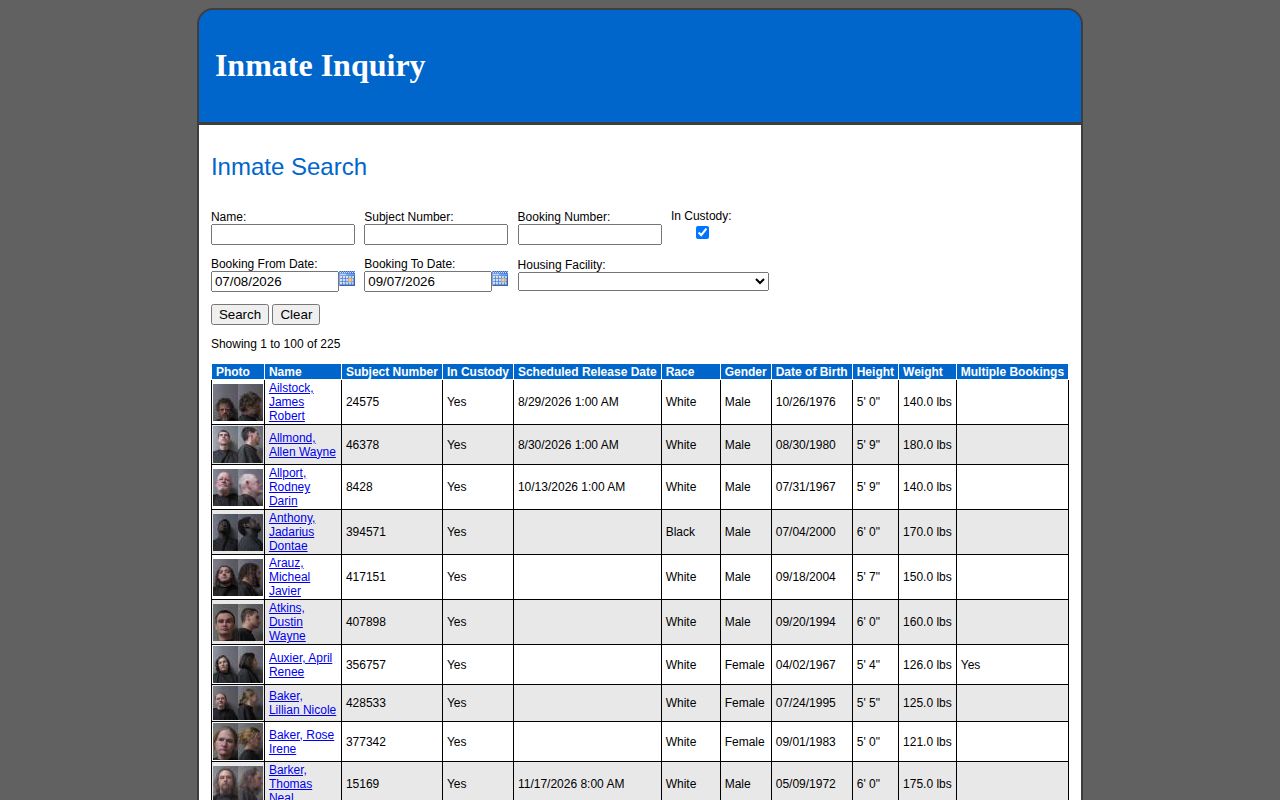
The inquiry page carries the date controls. That screen shows the official setting for building a multi-day range, not a separate county blotter.
Weekly Arrest Log Entries
Each result row can carry plenty. Expect a photo, name, subject number, custody status, scheduled release date, race, gender, date of birth, height, weight, and a multiple-bookings flag. Open a record and more appears. The detail page may add booking number and date, prisoner type, classification, total bond, booking origin, charges, arresting agency, court date, courtroom, docket, sentence fields, and release history.
| Question | Field to compare |
|---|---|
| Is this one intake or an older event? | Booking number, booking date, multiple bookings |
| Who brought the person to jail? | Arresting agency and booking origin |
| Is county custody current? | In Custody, release, and scheduled release fields |
| What was alleged at intake? | Charge description, offense date, crime class |
| Where did the case go? | Court, courtroom, docket, and disposition |
| Is an image available? | Photo column or dated images on the detail page |
Fields vary from record to record. A dated photo may come from an earlier booking. Match the dates and subject identifiers before trusting any match.
Weekend Arrest Records Need Context
No Madison County source backs claims of a weekend surge, Monday upload, holiday delay, or overnight batch. Treat timing talk as folklore. A multi-day range still earns its keep, because a narrow calendar boundary can hide a booking that finished processing a day later. That is a search tactic. It says nothing about staffing or arrest volume. When a weekend matters, pull the dates on both sides of the expected arrest. Then compare three separate fields: booking date, offense date, and court date. Each describes a different event. A late-Sunday arrest can hit county booking after midnight. A municipal hold or transfer stretches that gap further. One more caution applies. A live row count is not a weekly arrest statistic, since your filters and constant changes shape it. The portal is not documented as a complete countywide census, and the records inventory proves only that the series exists.
Agency Lines Change the Log
A Madison County Jail date range blends bookings from the sheriff, municipal departments, Illinois State Police, and other agencies. It is not an agency-by-agency blotter. Granite City and Edwardsville keep separate police records routes, and neither city posts a dedicated daily arrest roster. Alton adds a wrinkle. Its police department runs a municipal jail holding city, state, and federal inmates. City arrests can be missing from the county log. The booking may never have reached the county, or the transfer may still be pending. So ask the arresting department first. It holds the incident or arrest report. Madison County Jail answers for county custody. Illinois Department of Corrections handles a person sentenced to state custody, and separate federal locator systems cover federal or immigration detention. A released person can vanish from a current-custody filter while the booking record and court docket remain. Search each question through its responsible office.
Madison Arrest Archive Limits
The portal states no retention term. No oldest searchable booking date appears either. Some older entries do surface on detail pages, yet that is not a promise of a full archive. Entries can vanish when custody or publication status shifts. Illinois sets the rules elsewhere. The Local Records Act, 50 ILCS 205, governs how local agencies dispose of public records. Agencies follow schedules and need commission authority. That framework offers no Madison-specific year count for this web portal. When an older booking is missing, ask the sheriff or the arresting department which schedule applies and whether the series was digitized, transferred, or lawfully destroyed. A good records request names the person, any aliases, the approximate date, the agency, and a booking number if known. The Madison County Sheriff's Office sits at 405 Randle Street in Edwardsville. Jail inmate questions go to (618) 692-1064. Court dockets belong to the Circuit Clerk. The Illinois State Archives offers a preservation route, not a source of recent booking photographs.
Official Arrest News Is Selective
The Madison County State's Attorney news stream posts dated releases on selected charges, prosecutions, task-force work, verdicts, and sentences. It is official. After a booking, a release may explain a filed case or a later outcome. It is not a roster. Many arrests never get a release at all. Word can also lag the booking by weeks. A prosecutor's release and a jail entry do different jobs, since one is selected case communication and the other is a custody record. The same official State's Attorney page carries the full set of releases.
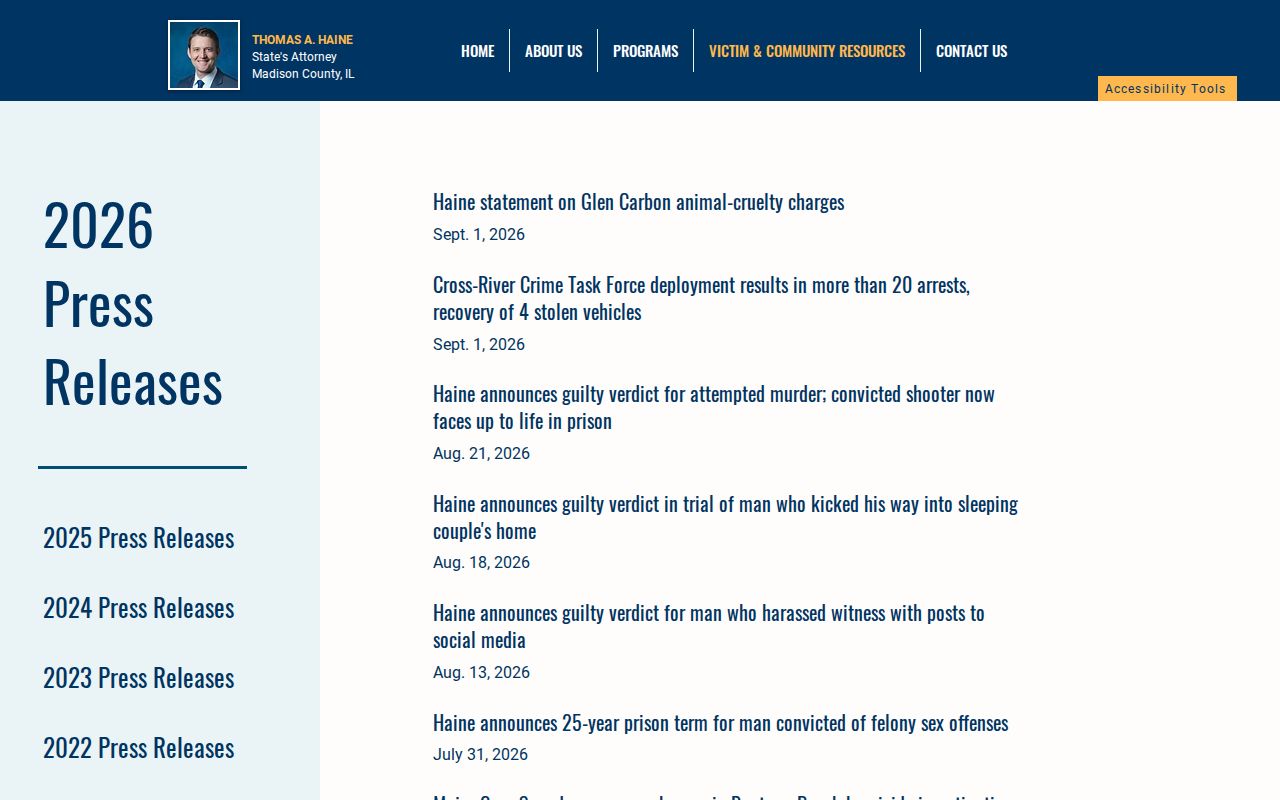
The county's news outlets cover arrest stories only selectively, so this page adds dated prosecution context without standing in for a jail query or a court docket.
Local Arrest Blotters Are Stories
Local news fills in the story once official sources run dry. RiverBender's Madison section follows Alton, Granite City, Edwardsville, task-force actions, and county charges. The Telegraph runs blotter pieces. EdGlenToday covers police and custody events too. The RiverBender Madison news section shows that story-first format. Its pace tracks news value, though, rather than any weekly booking feed.

Unofficial aggregators deserve more caution still. Busted Newspaper, RecentlyBooked, and Mugshots.zone have carried Madison County material. Their archives run stale, duplicated, or incomplete. Old pages drift free of current custody. Mugshots.com and Arrests.org list no local Madison page at all. Treat every aggregator as a secondary lead only. No photographs are rehosted, and no removal service is endorsed.
Arrest Logs Do Not Decide Guilt
A weekly log entry marks a booking, full stop. The story continues in court. Charges can be reduced, amended, or dismissed as a case moves. The Madison County Circuit Clerk's docket shows the disposition, meaning the court's final outcome. Match the docket to the right booking. News stories linger online. Unofficial archives do too, long after custody or charges change. Check each claim against the originating agency and the current court record before relying on it.